Idaho Transportation Department migrates 15,000 legacy boring logs into BoreDM
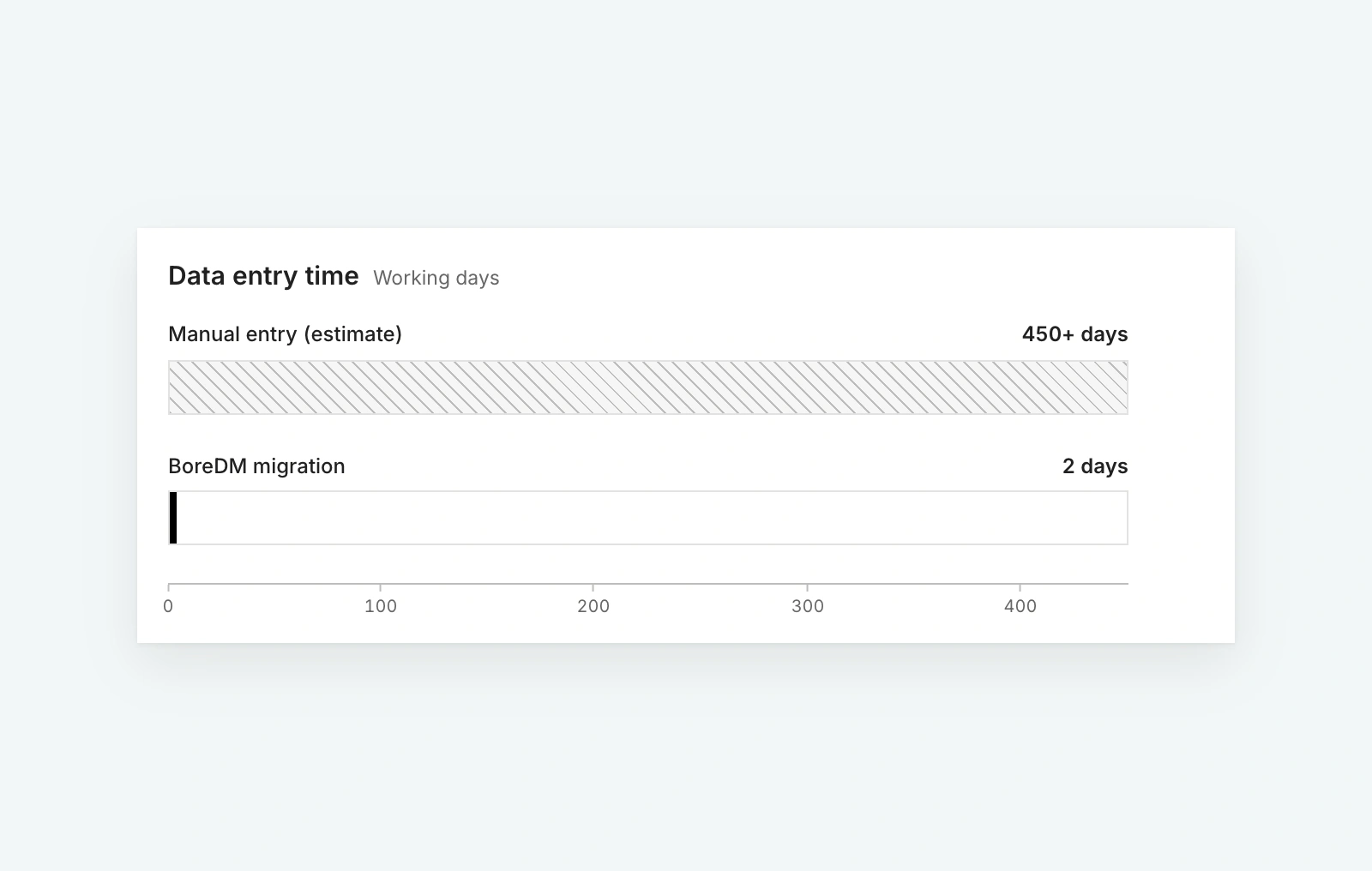
BoreDM's migration team moved roughly 15,000 historical boring logs from the Idaho Transportation Department into the same database as the agency's active projects, converting across seven source formats. PDF processing took two days and replaced an estimated 450 working days of manual entry.
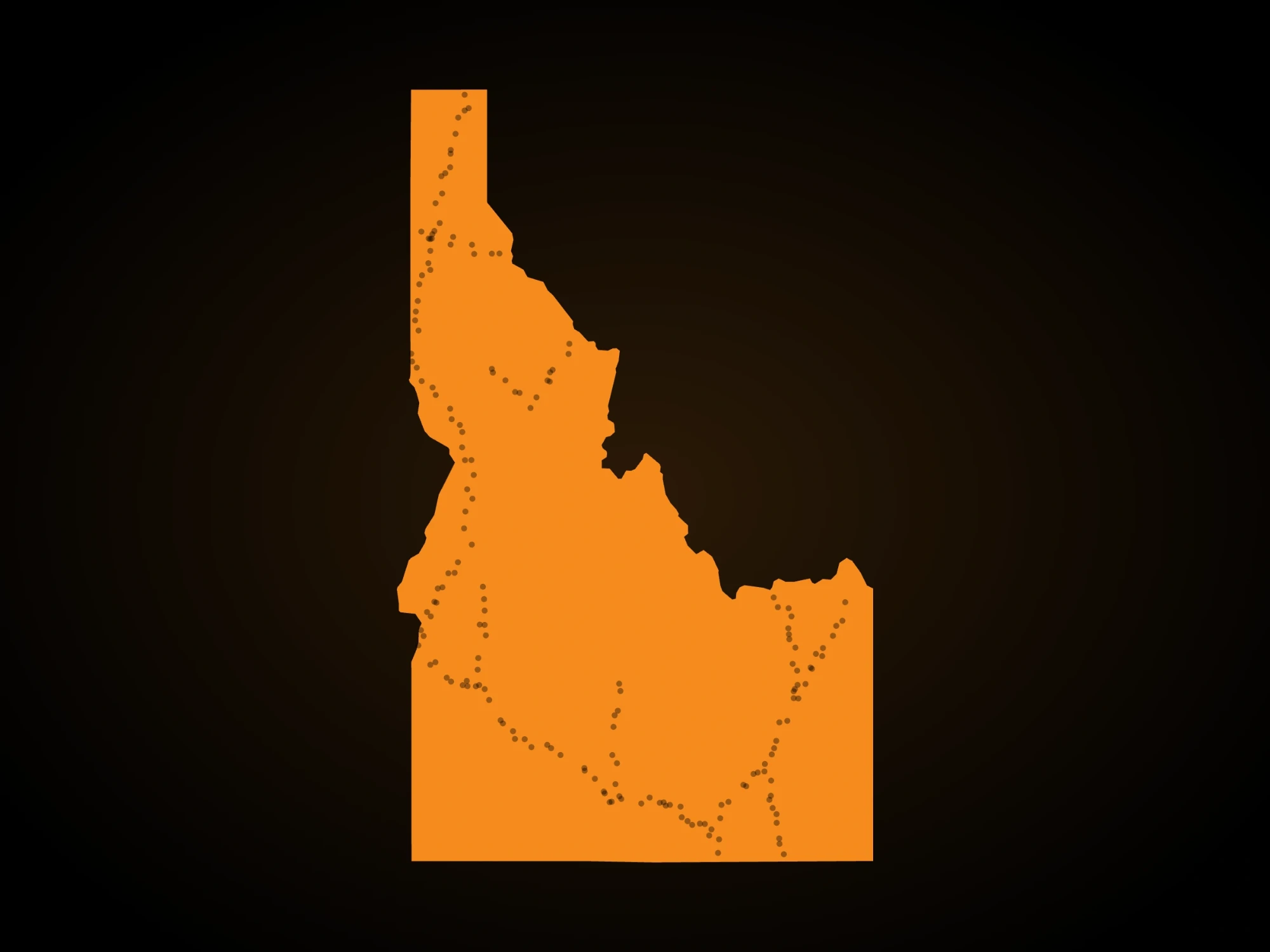
- Customer
- Idaho Transportation Department
- Customer Type
- State Department of Transportation
- Scope
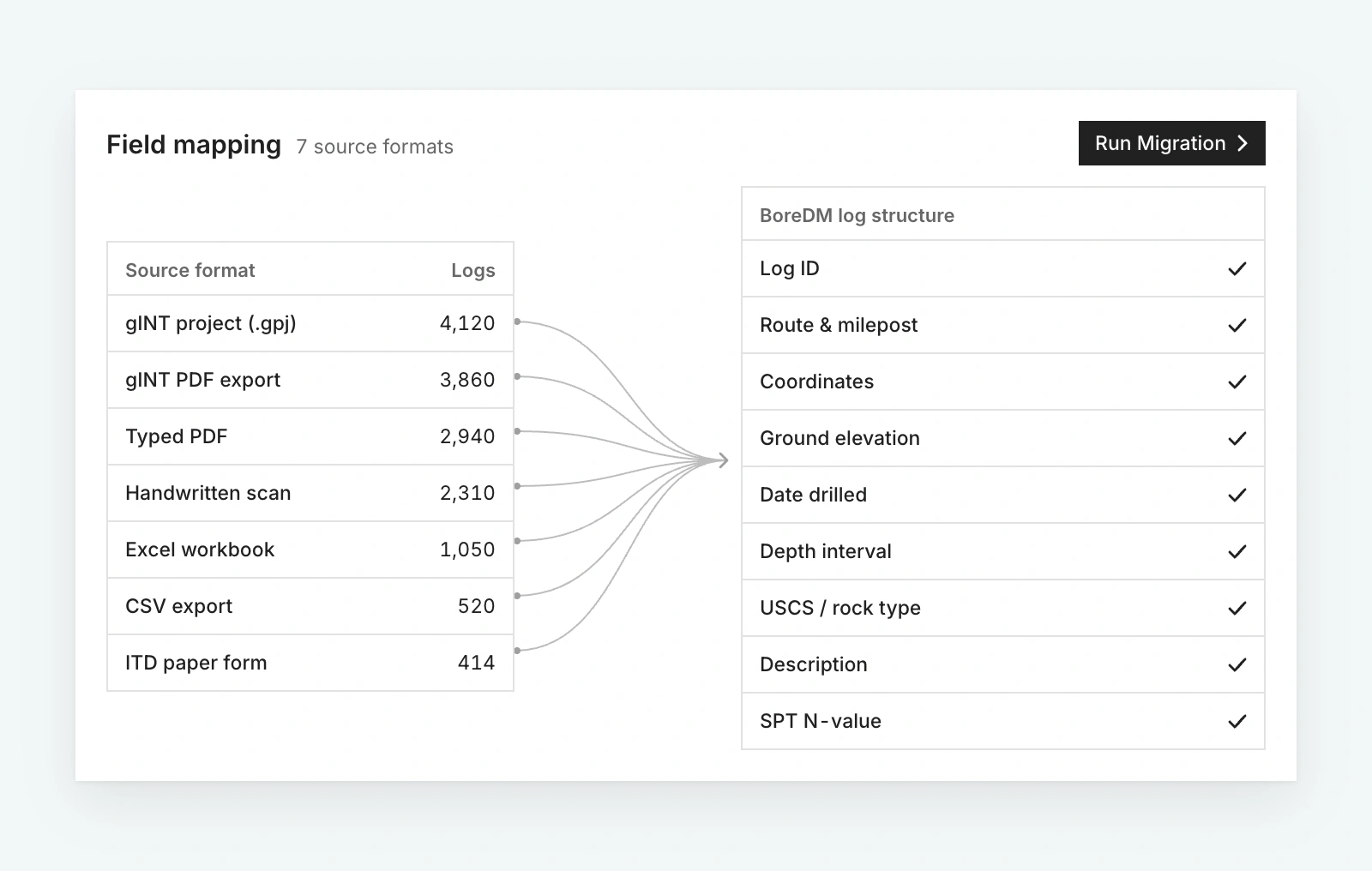
- Managed migration of historical boring logs across seven formats, including gINT project files, gINT PDF exports, typed and handwritten PDF logs, and spreadsheets
- BoreDM Features Used
- AI-powered PDF digitization, centralized database, map view, 3D visualization, cross-project search
Background
ITD maintains more than 12,400 centerline miles of highway and 1,850 bridges, with about 1,645 staff across six districts. Nearly every project on that network begins with a subsurface investigation, so the agency has produced boring logs for decades.
The problem was where those logs lived. Each one was an individual PDF or an individual gINT file. Readable, but not queryable, and practically unusable for analysis across projects.
ITD already used BoreDM for its active geotechnical work. The migration brought 15,000 historical logs into that same account as structured data.
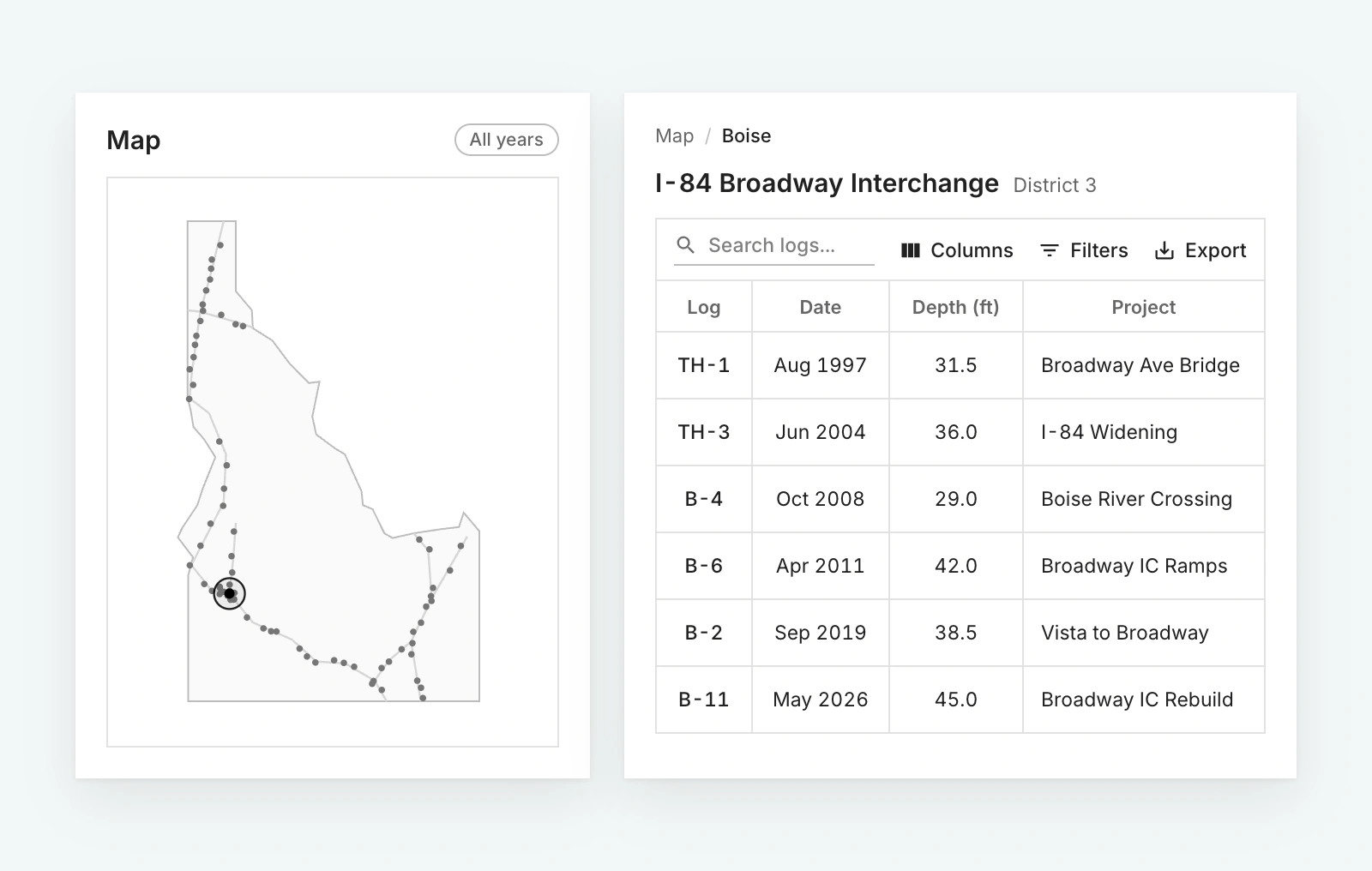
Decades of logs, now one dataset
To see what earlier investigations found at a location, an engineer had to track down the right files and open them one at a time. Using the data meant re-keying it into a spreadsheet by hand.
Keying the entire archive into a database that way would have taken more than 450 working days. Without a faster route, decades of valuable subsurface data stayed unused.
How the migration ran
-
Map the archive
The migration team worked with ITD to review the archive and map each gINT database format to BoreDM's standard log structure.
-
Extract the data
BoreDM pulled header data and interval-level geology from typed and handwritten PDFs, processing about 20,000 pages in two days.
-
Load and georeference
The extracted data was loaded into ITD's BoreDM database, with every log georeferenced.
-
Review before go-live
ITD checked the migrated data against the source material before the archive went live.
Migrated logs use the same database schema as ITD's current work, so a log from 1997 queries exactly like a log from 2026.
Results
- 15,000+ boring logs migrated into one standardized database
- 20,000+ pages processed in two days
- An estimated 3,750+ hours of manual entry avoided
- Seven source formats consolidated into one log structure
What the archive does now
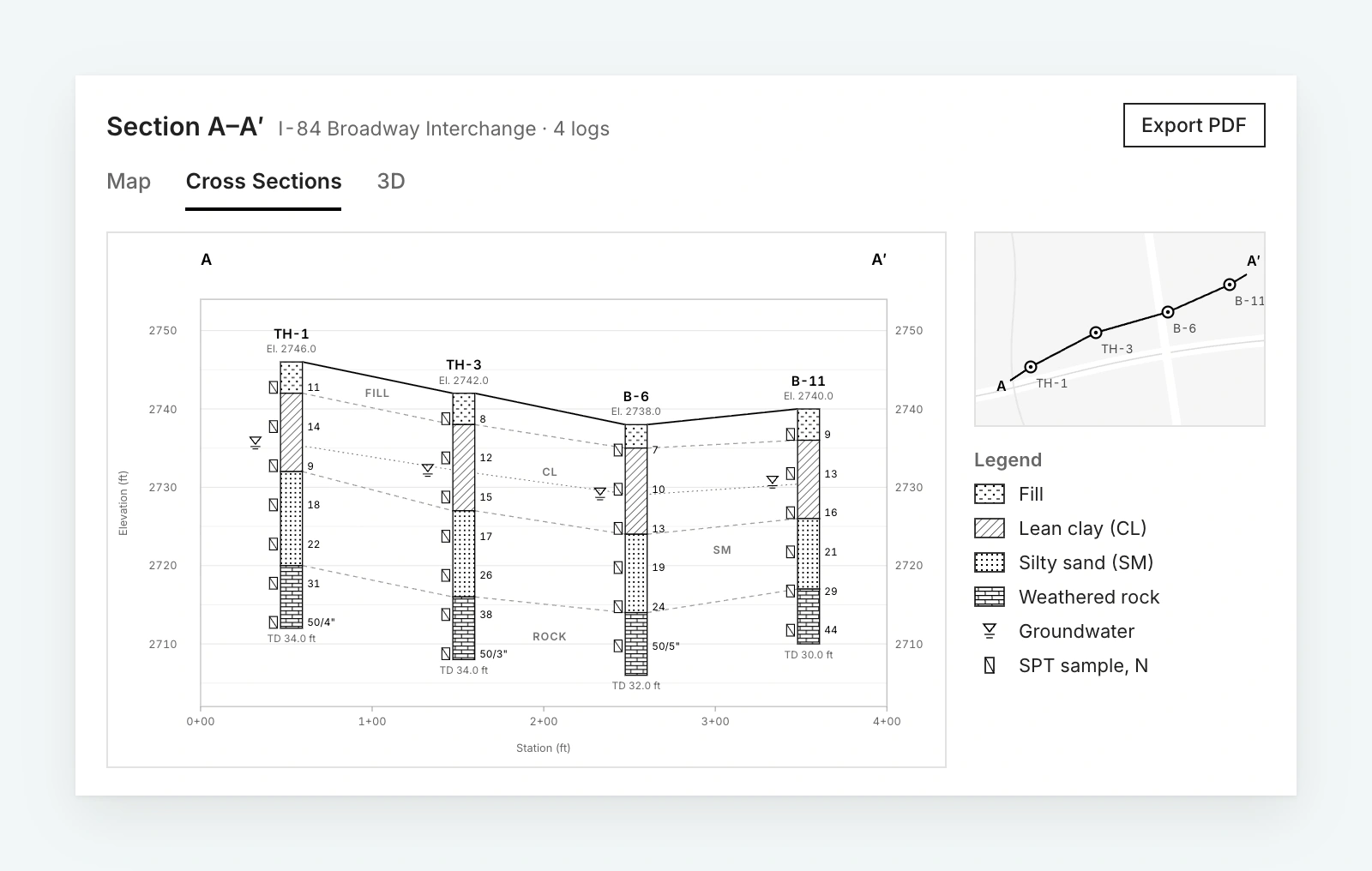
Engineers open the map view, zoom to a site, and pull its full boring history by location and date. 3D visualization shows how subsurface conditions change across a site. Because cross-project search covers the whole archive, the team can compare soil conditions across an area or track how moisture has changed over time.
Once the boring logs were structured, they stopped being static files buried in scattered PDFs and became a real dataset we can query across projects, places, and time. Now we can click into a site on a map, pull its full boring history by location and date, and start asking bigger questions about ground conditions.
Garrett Speeter, Geologist and Project Manager, Idaho Transportation Department
Migrate your own archive
BoreDM's managed migration brings paper logs, PDFs, and gINT libraries into one database alongside your active projects. More than 20 states and municipalities have selected BoreDM.
Request a demo and we will review your archive and provide a Schema Brief previewing what a migration would involve.